Your intake, confidentiality limits, and every release of information, documented to the new Code.
Psychologists, counsellors, and mental-health social workers now operate under the enforceable Psychology Board Code of Conduct (effective 1 December 2025) that frames informed consent as an ongoing process, tightens telehealth requirements, and mandates cultural-safety obligations. Your fear is not procedural: a confidentiality breach, a notifiable complaint over consent or boundaries, a telehealth session that drops during a crisis with no documented protocol, or an audit asking to see your consent and confidentiality-limits documentation. GetConsent turns the therapeutic frame, fees, confidentiality limits, recording, telehealth suitability, into comprehension-verified consents that document what the Code requires.

From a signature in a filing cabinet to evidence you can pull up in minutes
The documents you actually send, ready on day one
Each one closes a specific, documented medico-legal gap
Procedure-specific content, comprehension checks calibrated to the litigated risks, and the named disclosure a generic form omits.
What your patients and your team actually see
The same calm, governed experience behind every psychology & mental health consent.
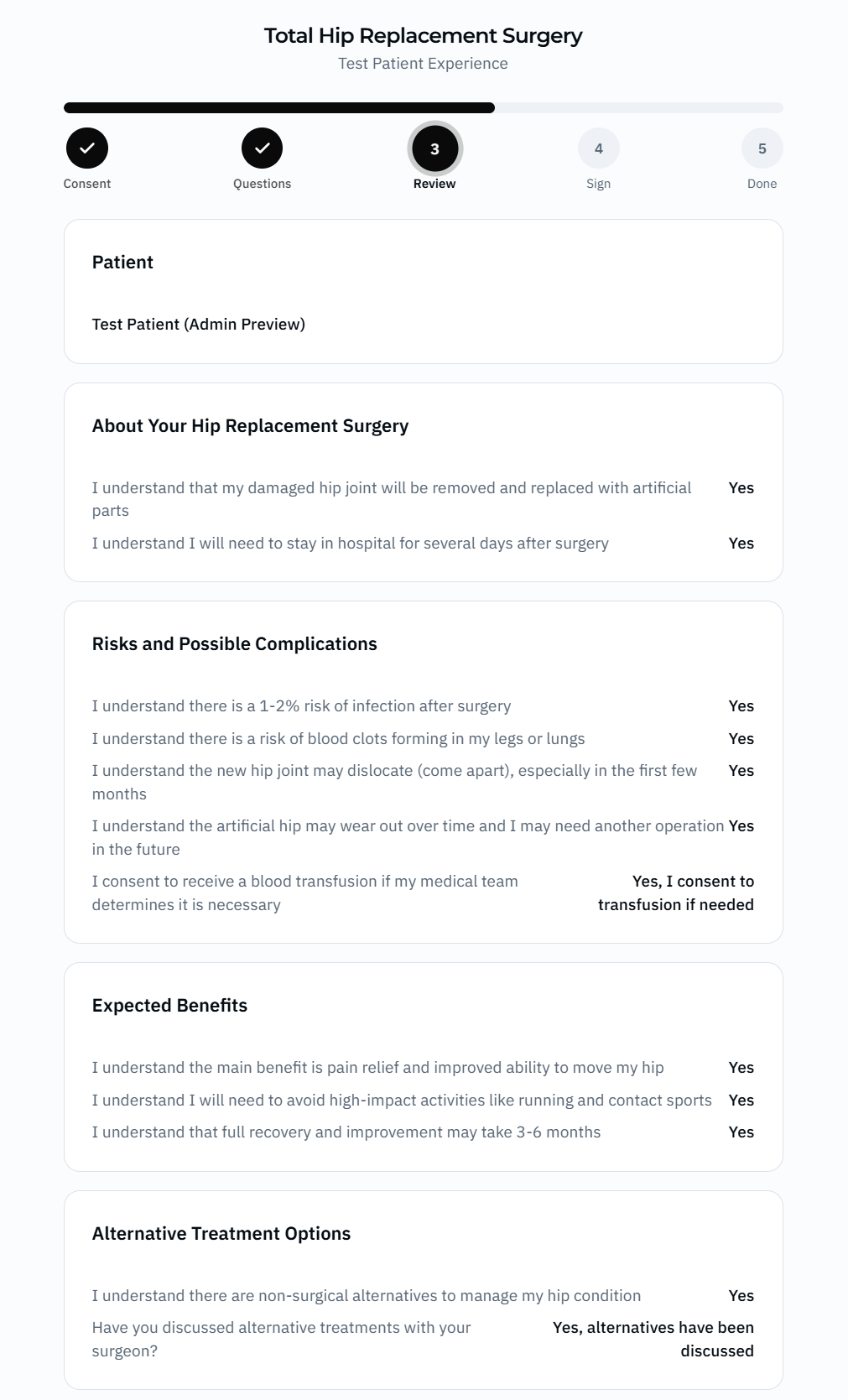
Completed at home, understood before they arrive.
Your patient opens the consent on their own phone before the appointment. They review the procedure in plain language, answer a comprehension check on the specific risks, and note their questions. You see their results, and where they struggled, before the consultation begins.
- Plain-language procedure content with audio read-aloud
- A comprehension check with recorded attempt history
- Questions captured before the consult, not during it
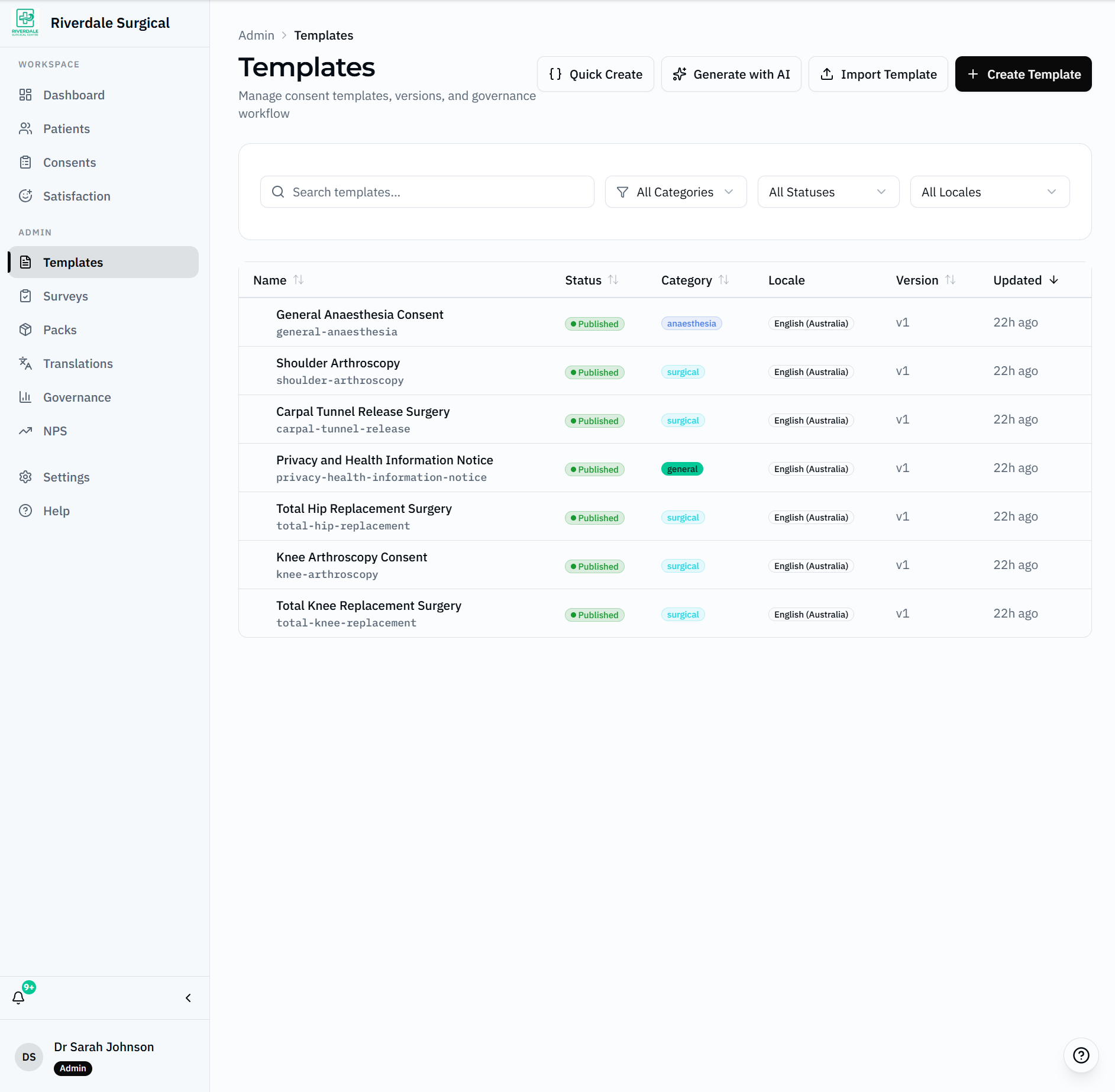
One approved version of every psychology & mental health template. Always.
Every template moves through Draft, Review, Approved and Published before it can reach a patient, with full version history and a named owner. Nothing live is ever silently changed, and nobody photocopies an outdated form from the second drawer.
- Four-stage approval with complete version history
- Procedure-specific disclosure that closes the medico-legal gap
- Translations reviewed by a human before they go live
The rest of the paperwork, on the same rails
The same governed workflow handles the cross-cutting documents your practice needs, authored once and reused everywhere.
- Telehealth consent (central, not optional)
- Privacy and collection notice
- Cancellation and financial agreement
- Data sharing for the GP referral loop
“My intake, confidentiality limits, telehealth protocol, and every release of information are now comprehension-verified consents documented to the new Code, instead of a PDF the client signs without reading.”
The same standard, calibrated to your discipline
See it with your own procedure list
Send a real consent today
Solo clinicians and small practices set up in an afternoon and send their first consent the same day. No procurement, no sales call, no card. Nothing about your current process has to change until you are satisfied.
See it run on your workflow
Multi-site hospitals and networks get a 30-minute demo configured for your EMR, your SSO, and the governance reports your accreditors actually ask for. You leave with a working trial account.