All specialties
Allied health

Before you put your hands on a patient, the risk is acknowledged, and proven.

Allied-health practitioners are mostly private, often solo, and personally liable. Consent has historically been a signature on an intake form, which is exactly the weak spot a complaint exploits. The specific fear is the rare-but-serious adverse event after a hands-on technique, a stroke after cervical manipulation, a fracture in an osteoporotic patient, an aspiration during dysphagia therapy, where the only record is a tick-box "I consent to treatment." GetConsent makes the real risk a named, comprehension-verified acknowledgement the patient completes before the technique.
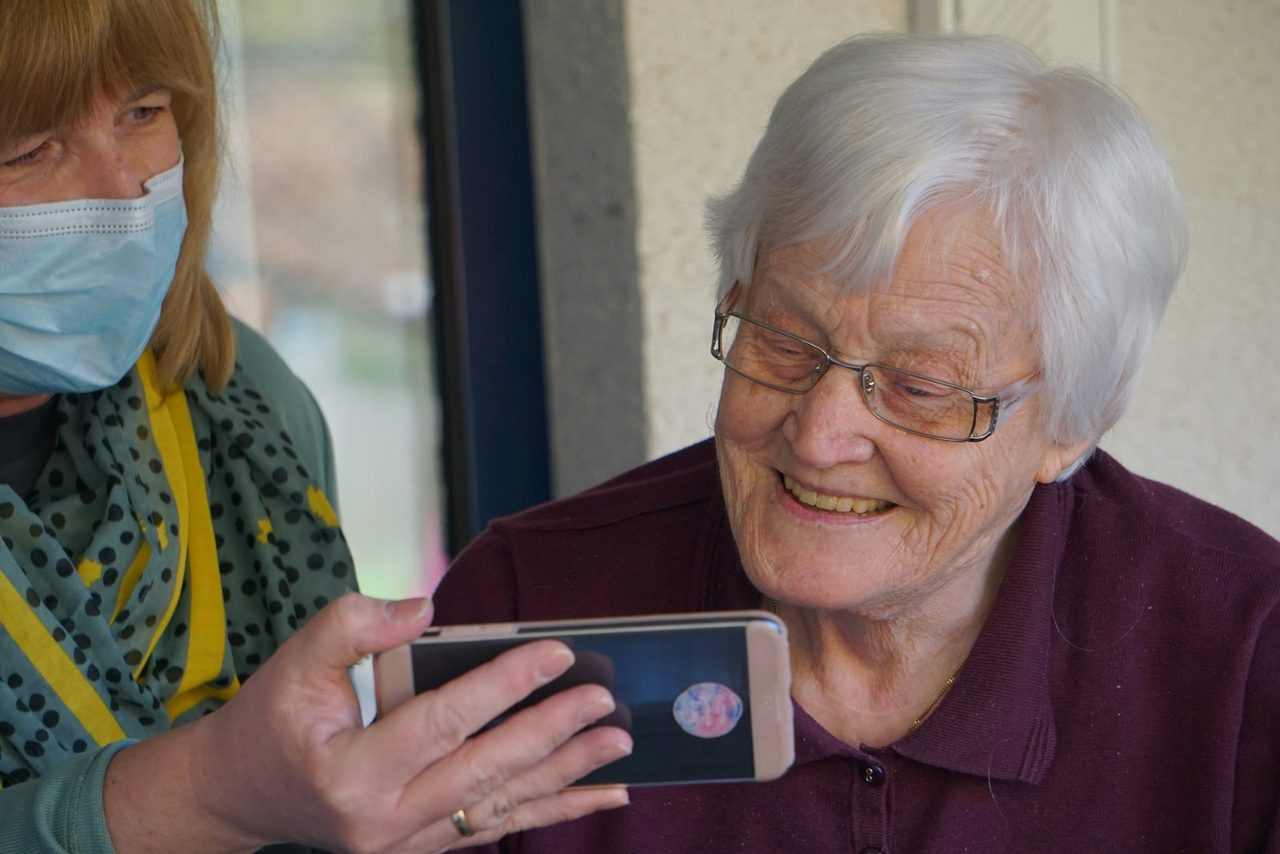
An allied health practitioner supporting a patient on a device
What changes for you

From a signature in a filing cabinet to evidence you can pull up in minutes

A tick-box "I consent to treatment" on an intake form.
A technique-specific consent that names the rare-but-serious risk and verifies the patient understood it.
Solo and small practices that look ungoverned next to a hospital.
The same evidence-grade workflow, governance, and audit trail a private hospital uses, on a solo practitioner’s caseload.
Telehealth care with no record that remote treatment was appropriately consented.
A telehealth consent capturing suitability, recording, and crisis protocol, per client, per episode.
Consents that matter for you

The documents you actually send, ready on day one

Physiotherapy: spinal and cervical manipulation consent (the flagship)Physiotherapy: dry needling and acupuncture consentChiropractic and osteopathy: HVLA adjustment consentPodiatry: nail surgery and partial nail avulsion with phenolisationExercise physiology: exercise prescription and pre-activity risk acknowledgementDietetics: clinical intervention consent (VLED, enteral, allergen challenge)Speech pathology: dysphagia assessment and management consentOccupational therapy: home assessment and equipment prescription consentOptometry: diagnostic dilation and data-sharing consentAll disciplines: telehealth consent and clinical photography
Templates built for allied health

Each one closes a specific, documented medico-legal gap

Procedure-specific content, comprehension checks calibrated to the litigated risks, and the named disclosure a generic form omits.

Spinal Manipulation Consent (Cervical & Lumbar)
Explicitly discloses the rare vertebral-artery and stroke risk, with a comprehension check that the patient understood it is rare but serious.
Why it mattersCourts and indemnifiers expect the stroke risk to be specifically named. A verified acknowledgement documents exactly that in the most-litigated allied-health scenario.
Dry Needling Consent
Pneumothorax risk for thoracic points, named and acknowledged.
Why it mattersTurns a routine technique into a documented, defensible one.
Podiatry Nail Surgery Consent
Phenol use, regrowth rate, and anaesthetic risk.
Why it mattersThe "it grew back / it’s ugly" complaint pre-empted by documented expectation-setting.
Dysphagia Management Consent (Speech Pathology)
Aspiration risk and the decision to continue oral intake, comprehension-verified.
Why it mattersA high-stakes, capacity-sensitive decision finally has an evidence trail.
Exercise Prescription Pre-Activity Risk Acknowledgement
Cardiac and falls risk for a supervised program.
Why it mattersThe EP and physio’s shield when an adverse event happens mid-session.
See it in action

What your patients and your team actually see

The same calm, governed experience behind every allied health consent.

On the patient’s phone

Completed at home, understood before they arrive.

Your patient opens the consent on their own phone before the appointment. They review the procedure in plain language, answer a comprehension check on the specific risks, and note their questions. You see their results, and where they struggled, before the consultation begins.

  • Plain-language procedure content with audio read-aloud
  • A comprehension check with recorded attempt history
  • Questions captured before the consult, not during it
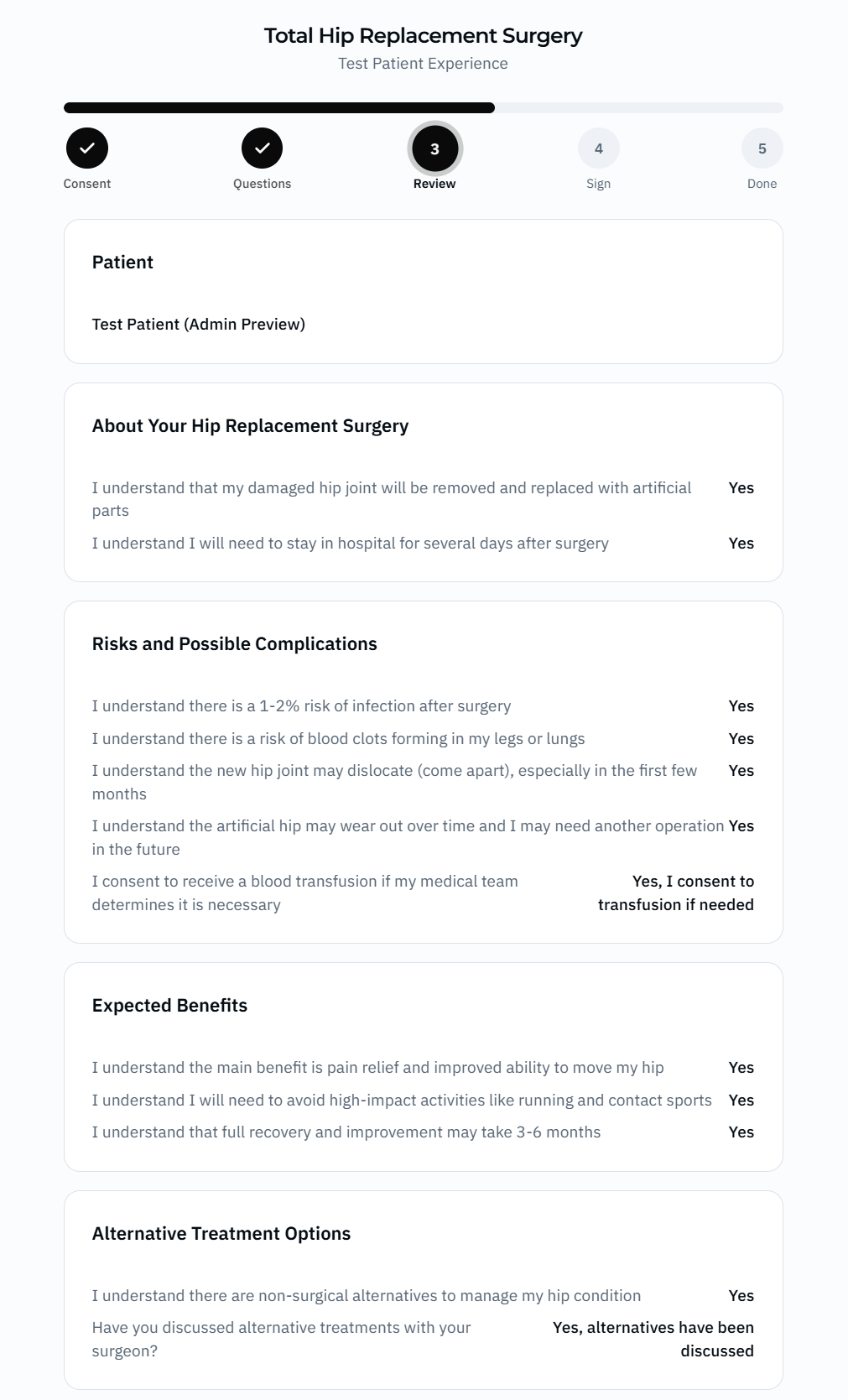
Patient reviewing their consent on a phone
Behind the scenes

One approved version of every allied health template. Always.

Every template moves through Draft, Review, Approved and Published before it can reach a patient, with full version history and a named owner. Nothing live is ever silently changed, and nobody photocopies an outdated form from the second drawer.

  • Four-stage approval with complete version history
  • Procedure-specific disclosure that closes the medico-legal gap
  • Translations reviewed by a human before they go live
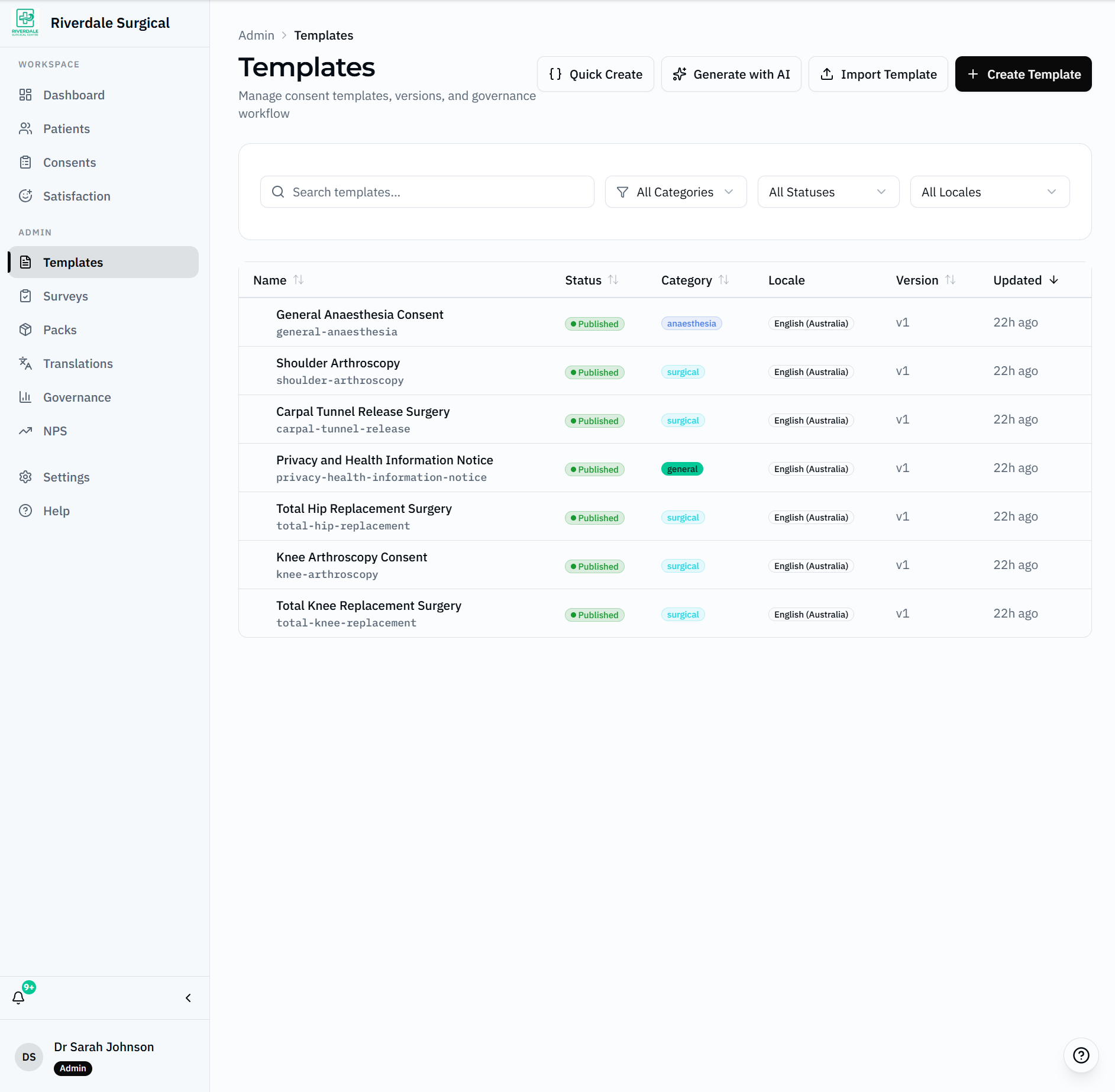
app.getconsent.health/admin/templates
GetConsent governed template library
Across the discipline

A focused pack for every sub-specialty

Physiotherapy
Spinal manipulation, dry needling, post-op rehab
Podiatry
Nail surgery, phenolisation, orthotics
Chiropractic
HVLA adjustment stroke-risk disclosure
Osteopathy
Manipulation and manual-therapy consent
Occupational therapy
Home assessment, equipment prescription
Dietetics
VLED, enteral, allergen-challenge consent
Exercise physiology
Pre-activity risk acknowledgement
Speech pathology
Dysphagia and instrumental assessment
Optometry
Diagnostic dilation, data sharing
Beyond procedure consent

The rest of the paperwork, on the same rails

The same governed workflow handles the cross-cutting documents your practice needs, authored once and reused everywhere.

  • Telehealth consent
  • Clinical photography and media (gait, posture, wounds)
  • Privacy and GP referral-loop data sharing
  • Cancellation and no-show policy
  • Treatment agreement for package-based care
The aha

Before I put my hands on a patient’s neck, they have reviewed and acknowledged the manipulation risk on their phone, in their language, and I have an evidence pack that proves it, not a tick-box on an intake form.

Cervical manipulation stroke-risk disclosure
The vertebral-artery and stroke risk of cervical manipulation must be specifically disclosed. A comprehension-verified acknowledgement is the strongest defence in the most-litigated allied-health scenario.
Reference →
  For allied health  

See it with your own procedure list

Clinics & practices

Send a real consent today

Solo clinicians and small practices set up in an afternoon and send their first consent the same day. No procurement, no sales call, no card. Nothing about your current process has to change until you are satisfied.

Hospitals & networks

See it run on your workflow

Multi-site hospitals and networks get a 30-minute demo configured for your EMR, your SSO, and the governance reports your accreditors actually ask for. You leave with a working trial account.